
You’ve probably heard the term “vibe coding” by now — the idea that you can describe what you want in plain English and an AI like Claude will write the working software for you. No developer required. It’s genuinely changed who gets to build software.
But there’s a catch that doesn’t get talked about enough: vibe coding is great at building the *front end* — the screens, the flow, the words your customer reads. It’s not trying to be your system of record, your compliance layer, or the years of hard-won business logic that platforms like Good2Go already have baked in. If you try to vibe-code your way to a full replacement for your job-management and preflight system, you end up rebuilding a decade of work from scratch — badly, and slowly.
That’s the gap hybrid development fills.
What “Hybrid” Actually Means
Hybrid development is the pairing of two things that are each really good at one half of the job: an AI system that can generate a custom front end fast, and an existing commercial platform that already does the heavy lifting in the background.
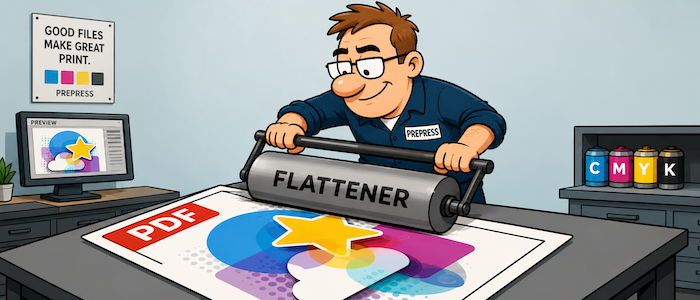
In practice, that looks like this: Claude builds the interface — the exact screens and workflow you want your customers to see, worded the way you’d word them, branded the way you’d brand them. Good2Go handles everything underneath it — preflight checks, trim and bleed validation, job tracking, file storage, notifications. Neither side is trying to do the other’s job. That’s the whole idea.
Why Not Just Vibe-Code the Whole Thing?
Because the backend is the expensive, unglamorous part — and someone’s already built it well. Preflight rules, prepress workflow, audit trails, uptime for a system that has to be right every time: that’s not a weekend AI project, it’s a platform. Good2Go already is that platform for print. Trying to recreate it with AI alone means spending your time solving problems Good2Go solved years ago, instead of building the thing that’s actually unique to your shop — your customer’s experience.
Hybrid development means you don’t have to choose. You get the speed and customization of vibe coding, without giving up the reliability of a platform your business already depends on.
Seeing It in Action: The Buyer Tool
We put this into practice with a tool we call the Buyer Tool — a custom, branded front end that lets a printer’s customers upload a print-ready file, get instant plain-language feedback on trim size and bleed, flag or approve the job, and never once have to log into Good2Go directly.
Behind the scenes, Good2Go is still doing everything it always does: running preflight, tracking the job, storing the file, sending notifications the moment something is uploaded. The only thing that changed is the door the customer walks through — and that door is exactly the one we designed, in days, not months.
That’s hybrid development in one example: an AI-built experience layered on top of a platform that was already doing the hard part.
Why This Matters for Print Shops

Most commercial printers have been stuck picking between two bad options — a generic vendor portal that looks like everyone else’s, or a custom software project expensive enough to need a committee to approve it. Hybrid development is a real third option. It’s fast enough that a shop can build and iterate on its own without a dev team, and it’s grounded enough that it isn’t reinventing the parts of the business that actually need to be bulletproof.
If you’re running Good2Go already, you’re closer to this than you might think — the hard part is already built. The only new piece is deciding what you’d want your customers to see.
Want to see it live?
Webinar: September 18, 2026 at 1pm Eastern
We’re walking through this exact build live. In this demo — including a full demo of the Buyer Tool.
Click on the link below to join us live or get the recording after the presentation to sign-up for the presentation.
https://global.gotowebinar.com/ojoin/9202260772109026142/7849211606835163654